Your garage door is the largest moving system in your home, and it operates multiple times every day with very little attention. Over time, rollers, hinges, springs, cables, and the opener itself experience normal wear. Without regular maintenance, that wear can lead to noisy operation, uneven movement, slow response, or sudden failure.
A professional garage door tune-up is one of the simplest and most cost effective ways to keep your system safe, quiet, and reliable. For busy Maryland households that rely on their garage as a primary entry point, routine tune-ups are especially important.
So how often should you schedule one? Here is what homeowners need to know.
1. The Recommended Garage Door Tune-Up Frequency
For most residential garage doors, the industry standard is:
One professional tune-up every 12 months.
This schedule works well for typical households where the garage door is used several times per day and the system is in generally good condition.
However, some homes benefit from more frequent service.
You should consider a tune-up every 6 months if:
- The garage door is the primary entry to the home
- You have a multi car household with heavy daily use
- The garage is attached to the home
- The opener or hardware is older
- The door is large, insulated, or particularly heavy
These systems experience more stress and wear and benefit from more frequent inspection and adjustment.
In very light use situations:
- Storage only garages
- Doors opened infrequently
A tune-up every 1 to 2 years may be sufficient, as long as no warning signs are present.
If you notice noise, jerky movement, or safety issues, do not wait for your regular interval. Schedule service right away.
2. Why Regular Garage Door Tune-Ups Matter
Routine tune-ups are a form of preventive maintenance that protect your home, your budget, and your family.
Regular service helps:
- Keep the door balanced and aligned
- Reduce strain on the opener motor
- Extend the life of rollers, hinges, springs, and cables
- Improve safety by testing sensors and auto reverse systems
- Catch small issues before they become expensive repairs
Many Maryland homeowners open and close their garage door dozens of times each day. Without routine maintenance, minor issues such as dry rollers, loose hardware, or slight misalignment can grow into problems like cable fraying, spring failure, or opener burnout.
3. What Happens During a Professional Garage Door Tune-Up
A professional tune-up from Glamour Overhead Doors is a full system inspection and adjustment, not just a quick spray of lubricant.
During a tune-up, a trained technician will typically:
- Inspect springs, cables, rollers, hinges, bearings, brackets, and panels
- Tighten loose bolts and mounting hardware
- Clean and adjust tracks
- Test door balance and alignment
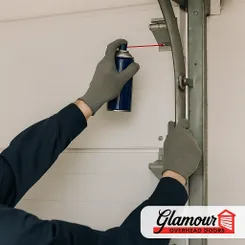
- Lubricate appropriate moving parts with garage door rated lubricants
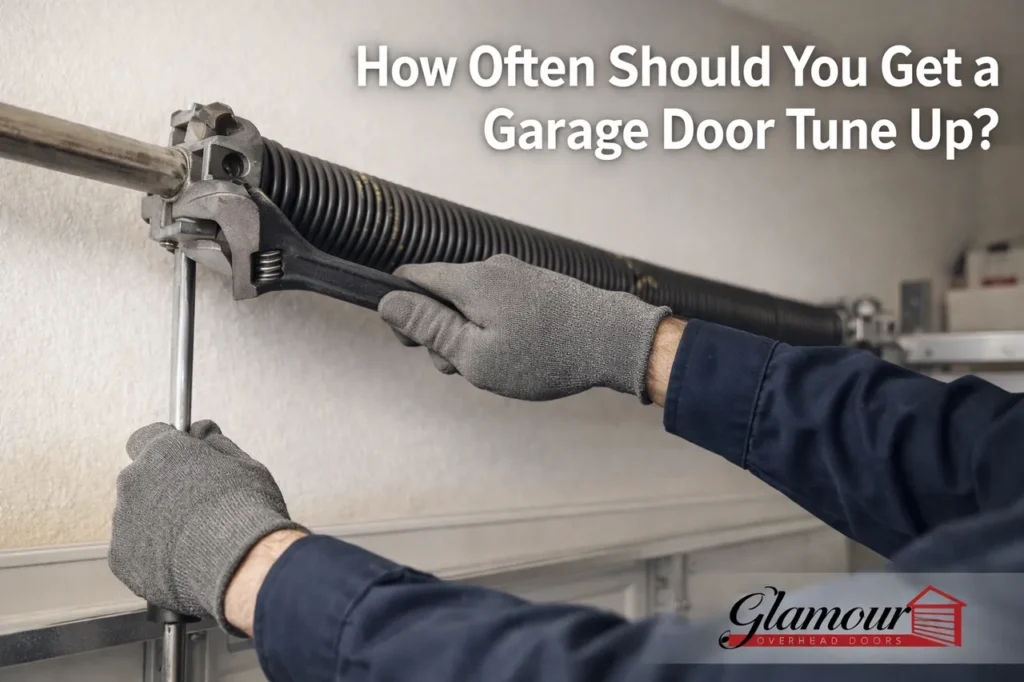
- Inspect the spring system for wear or imbalance
- Test the opener motor, rail, and drive system
- Check photo eye sensors, auto reverse, and force settings
- Confirm smooth, quiet, and safe operation
A properly tuned garage door should lift smoothly by hand, stay in place when partially open, and operate quietly with minimal vibration.
4. Signs You Should Not Wait for Your Next Tune-Up
Some problems should be addressed immediately. Call a professional if you notice:
- Grinding, squeaking, scraping, or banging noises
- Jerky or uneven movement
- The door shaking or wobbling as it moves
- Slow response after pressing the remote
- The door feeling heavy when lifted manually
- One side of the door sitting lower than the other
- Tracks that appear dirty, rusty, or misaligned
- The door reversing unexpectedly or failing safety tests
Continuing to use the system in these conditions can lead to spring failure, track damage, or opener motor burnout.
5. When Tune-Ups Become Even More Important
Some homes and setups require closer attention throughout the year.
You may need more frequent tune-ups if:
- The garage experiences humidity or extreme temperature swings
- The opener is more than 10 years old
- Springs or cables were replaced recently and need monitoring
- The garage is used as a workshop or high traffic space
- Multiple vehicles are parked inside
- The door is heavily insulated or oversized
Maryland’s seasonal weather can affect metal components. Cold winters and humid summers can change lubrication performance and alignment, making regular inspection especially valuable.
6. Does a Tune-Up Include the Opener or Just the Door?
A proper tune-up includes both the garage door and the opener, because they work as a single system.
Door components checked include:
- Springs and cables
- Rollers and hinges
- Tracks and mounting hardware
- Panels and weather seals
Opener components checked include:
- Motor and drive system (belt, chain, or screw)
- Rail alignment and mounting
- Force and travel limits
- Safety sensors and auto reverse function
- Wall controls and remotes
Between professional visits, manufacturers often recommend homeowners:
- Test the auto reverse system monthly
- Check door balance periodically
- Apply light lubrication annually using approved products
7. DIY Maintenance vs Professional Service
Homeowners can safely handle basic upkeep, but anything involving high tension or complex adjustment should be left to a professional.
Safe DIY tasks include:
- Visual inspections for rust, frayed cables, or loose hardware
- Cleaning debris from tracks and sensor lenses
- Light lubrication of hinges and rollers with garage door rated lubricant
- Monthly safety sensor and auto reverse testing
Tasks to leave to a professional:
- Adjusting or replacing springs or cables
- Correcting major track misalignment
- Rebalancing a heavy or uneven door
- Electrical or wiring work on the opener
- Resetting force and travel limits after mechanical issues
Improper handling of high tension components can cause serious injury. This is especially true for garage door springs, which store extreme energy and can fail violently if mishandled.
If you want a deeper understanding of why spring repairs should never be DIY, read our guide on the hidden dangers of garage door springs.
8. Schedule Your Professional Garage Door Tune-Up
Glamour Overhead Doors provides thorough and reliable garage door tune-ups for homeowners across Mount Airy, Frederick, Carroll County, Howard County, and Montgomery County.
Regular maintenance helps prevent breakdowns, extends the life of your system, and keeps your garage door operating safely and quietly all year.
For fast assistance or questions, call 240-457-3501.
To schedule your tune-up online: Click Here