Regular garage door maintenance does not have to be complicated for homeowners. There are several simple tasks you can safely handle on your own to keep your garage door running smoothly. These small steps reduce strain on the opener, extend the life of key hardware, and help you catch early warning signs before they turn into expensive repairs.
For Maryland homeowners, routine maintenance is especially important. Seasonal humidity, summer heat, and cold winter temperatures can all affect metal components like rollers, hinges, tracks, and springs over time.
Below are the safe DIY tasks you can perform, along with the areas that should always be left to a professional technician.
1. Why DIY Garage Door Maintenance Matters
A few basic maintenance habits can make a big difference in the longevity and safety of your garage door system. Simple upkeep helps:
• Keep the door operating smoothly
• Reduce strain on the opener motor
• Extend the life of rollers, hinges, and springs
• Identify problems early before they become major repairs
For homeowners in Mount Airy, Frederick, and surrounding Maryland counties such as Carroll, Howard, and Montgomery, these steps can help prevent unexpected breakdowns and emergency service calls.
2. How to Safely Clean Garage Door Tracks
Cleaning the garage door tracks is one of the easiest and safest maintenance tasks you can perform. Tracks collect dust, dirt, and debris over time, which can cause the door to shake, bind, or move unevenly.
How to Clean Garage Door Tracks
• Wipe the inside of the tracks using a dry or slightly damp cloth
• Use a mild household cleaner if needed, then dry thoroughly to help prevent rust
• Avoid heavy degreasers and harsh chemicals
• Never apply heavy grease or thick lubricant inside the track. Tracks should remain clean and dry
• Look for debris, rust, dents, or anything that could obstruct smooth movement
Clean tracks allow rollers to glide properly and reduce unnecessary wear on the system.
3. What Lubricants to Use and What to Avoid
Using the correct lubricant is one of the most important parts of garage door maintenance. Choosing the wrong product can actually cause more damage over time.
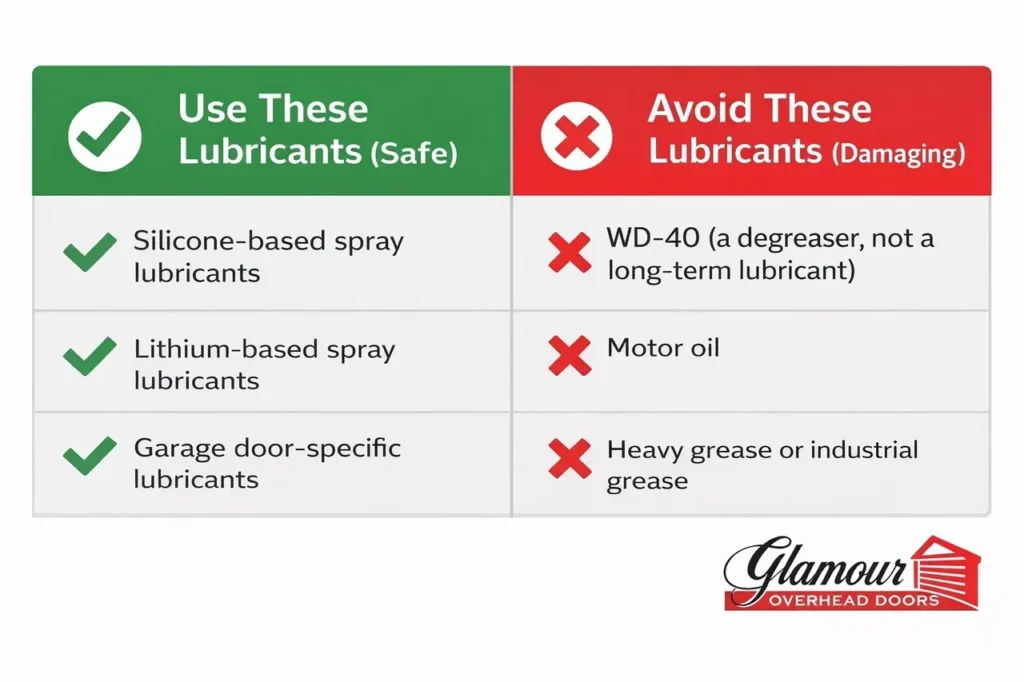
Garage Door Lubricant Comparison
Why the Right Lubricants Matter
• They are thin and long-lasting
• They are less likely to attract dust and dirt
• They protect metal components and reduce friction
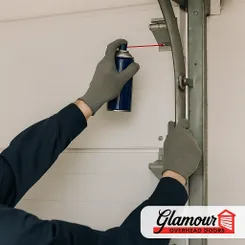
Where to Apply Lubricant
• Hinges
• Metal rollers (avoid lubricating nylon roller wheels)
• Pivots and other moving joints
• Garage door torsion springs, lightly, to help prevent corrosion. Do not touch or adjust them
A small amount is enough. Over-lubricating can cause buildup and attract dirt.
4. What DIY Garage Door Maintenance Should Avoid
Some products and repairs can do more harm than good.
Never use:
• WD-40
• Grease
• Motor oil
• Spray adhesives or thick, sticky lubricants
These products can:
• Attract dust and dirt
• Create sludge on rollers and hardware
• Cause the door to bind or stick
• Damage bearings over time
5. Warning Areas Where DIY Should Stop
There are parts of your garage door system that should never be adjusted or repaired without professional training. If an issue involves tension, electricity, or lifting the full weight of the door, it is time to call a professional technician.
- Avoid attempting:
- Spring adjustments or spring replacement (see our Garage Door Spring Repair service)
- Cable repairs or tightening
- Track realignment
- Opener motor or wiring fixes (learn more about Garage Door Opener Services)
- Bent or damaged panel repairs
Incorrect handling can lead to serious injury, further damage, or total system failure.
6. Schedule a Professional Garage Door Tune Up or Safety Inspection
DIY maintenance is helpful for basic upkeep, but professional service is essential for safety and long-term performance. Glamour Overhead Doors provides tune ups, safety inspections, and repairs throughout Mount Airy, Frederick, and surrounding Maryland counties including Carroll, Howard, and Montgomery.
For fast help or to speak with a technician, call 240-457-3501.
To request a free quote or schedule your service online, fill out the quick form on our contact page.
Frequently Asked Questions About Garage Door Maintenance in Maryland
How often should I lubricate my garage door in Maryland?
We recommend light lubrication every six months, especially before winter freezing temperatures or after a humid Maryland summer.
Why is my garage door making a grinding or squeaking noise?
This is often caused by dry rollers, hinges, or debris in the tracks. If cleaning and lubrication do not fix the issue, it may indicate a spring, alignment, or opener problem that requires professional service.
Why can’t I use WD-40 on my garage door?
Should you use WD-40 on your garage door? No. WD-40 is a cleaner and moisture displacer, not a long-term garage door lubricant. It can temporarily quiet a noisy garage door, but it also strips away existing lubrication and leaves a residue that attracts dust and dirt. Over time, this buildup can cause your rollers, hinges, and other moving parts to wear out faster and make the door bind, squeak, or grind.
For proper garage door maintenance, use a silicone-based spray, lithium-based spray, or a garage door–specific lubricant on hinges, metal rollers, and other moving components instead of WD-40.